
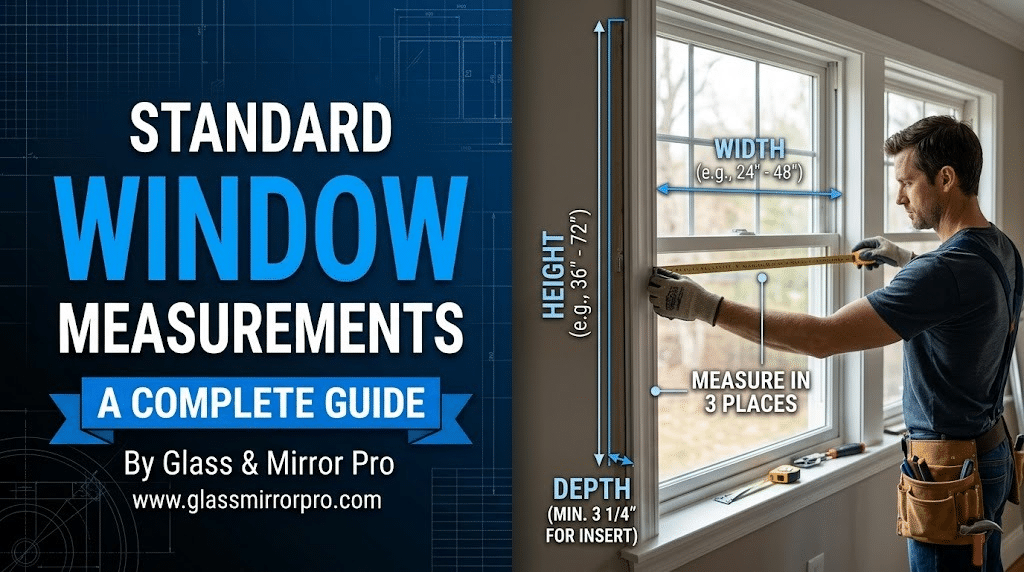
A Guide to Standard Window Measurements and Sizes
Published by Glass Mirror Pro | Expert Glass & Mirror Solutions
Whether you are designing your dream home from the ground up, planning a major renovation, or simply replacing a cracked pane of glass, knowing your window measurements is essential. Windows are not one-size-fits-all, but manufacturers do rely on standardized sizing to make construction, ordering, and replacing much easier. Understanding standard window measurements will help you estimate costs accurately, ensure you meet safety building codes, and order the correct replacement glass without the headache of unexpected modifications.
Visual Breakdown: Window Measurements
1. How to Read Builder Notation (The 4-Digit Code)
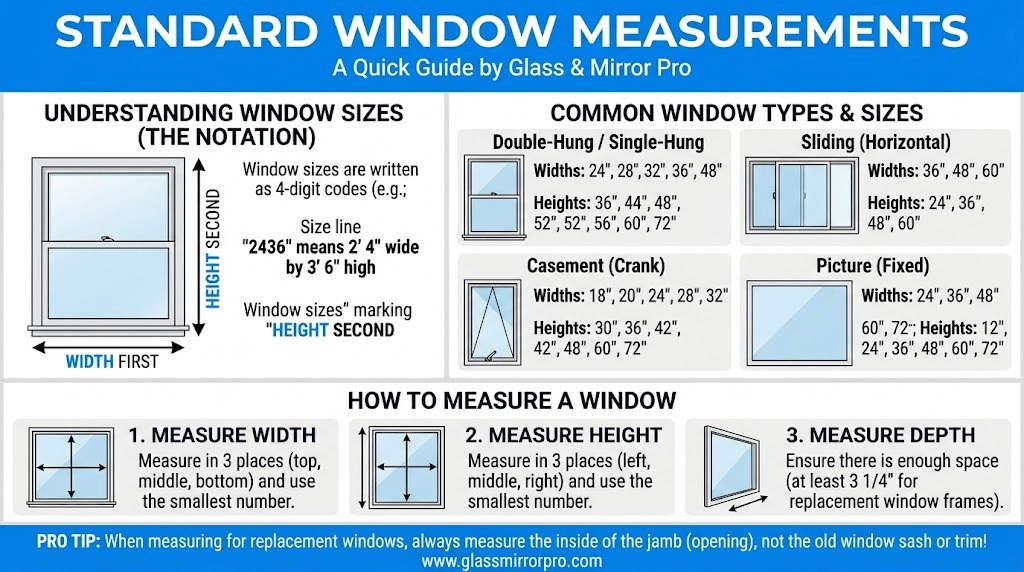
If you look at architectural plans or shop for windows at a supply store, you will notice windows are often labeled with a confusing four-digit number, like “2030” or “3040”. This is known as builder notation. The first two digits represent the width, and the second two digits represent the height in feet and inches. For example, a 2436 window means it is 2 feet, 4 inches wide (28 inches) by 3 feet, 6 inches high (42 inches). Understanding this industry-standard shorthand is the first step to ordering the correct frame or replacement glass.
2. Standard Sizes for Double-Hung Windows
Double-hung windows (where both the top and bottom sashes move vertically) are the most common window type in residential homes. Standard double-hung windows typically range from 24 to 48 inches in width and 36 to 72 inches in height. Common standard sizes you will find in stock include 24″ x 36″, 24″ x 48″, 28″ x 54″, and 36″ x 60″. Because the glass in these windows is divided into two separate sashes, replacing the glass in a single sash is incredibly common and highly cost-effective.
3. Standard Sizes for Sliding and Picture Windows
Sliding windows (which operate horizontally) and picture windows (large, fixed panes of glass that do not open) follow different standard sizing rules. Sliding windows are generally wider than they are tall, typically ranging from 36 to 84 inches wide and 24 to 60 inches high. Picture windows, designed to maximize views and natural light, can be massive. Standard picture window sizes range from 2 feet to 8 feet in width, and 1 foot to 8 feet in height. Because picture windows require large, unbroken sheets of glass, you will often need thicker, industry-standard double strength or tempered glass to ensure structural safety.
4. Crucial Bedroom Rules: Egress Window Sizes
If you are installing windows in a bedroom or basement sleeping area, you must adhere to strict emergency escape rules. According to the International Residential Code (IRC), “egress windows” must provide a minimum net clear opening of 5.7 square feet (or 5.0 square feet for ground-floor windows). Additionally, the opening must be at least 20 inches wide and 24 inches high, and the bottom of the opening can be no higher than 44 inches from the floor. Always verify your measurements against these codes to ensure the safety of your family and pass home inspections.
Need the Perfect Replacement Glass?
While standard sizes dominate the construction industry, older homes, custom architecture, and settling frames often require precision custom-cut glass. If you have a broken pane, don’t worry about forcing an off-the-shelf window to fit your space. The experts at Glass Mirror Pro will custom-cut high-quality replacement window glass to your exact specifications, guaranteeing a flawless, weather-tight fit every time.



Leave a comment