

What is Low-E Glass? The Secret to Energy-Efficient Windows
Published by Glass Mirror Pro | Expert Glass & Mirror Solutions
If you are shopping for replacement windows or building a new home, you have undoubtedly heard contractors and salespeople throw around the term “Low-E.” But what is Low-E glass, and is it really worth the investment? Low-E stands for “Low Emissivity,” and it is widely considered the most significant advancement in window technology in the last few decades. Upgrading to Low-E glass is the single most effective way to drastically reduce your energy bills, improve your home’s comfort, and protect your interior from sun damage.
Visual Guide: How Low-E Glass Works
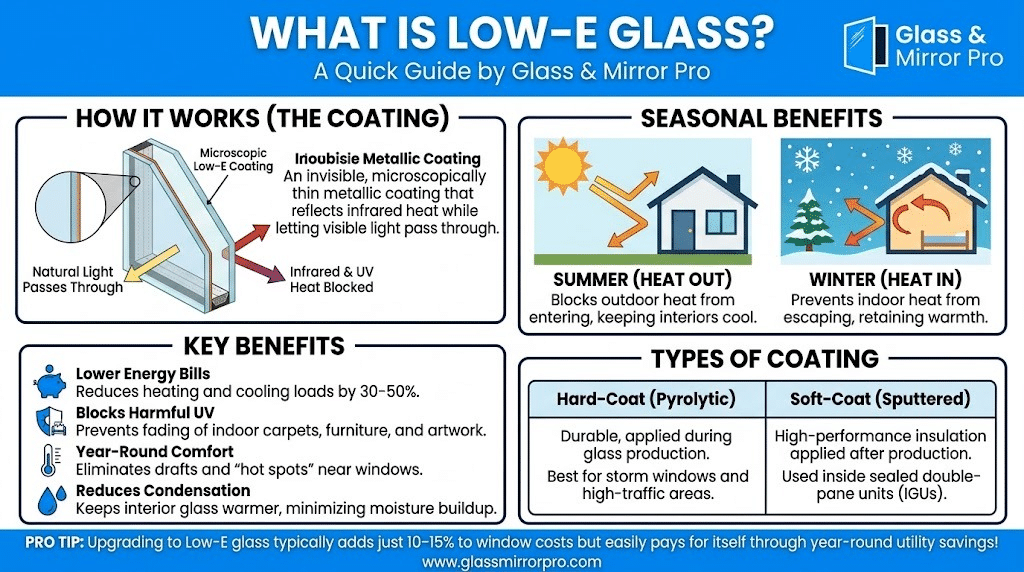
1. The Science: Microscopic Metallic Coatings
To understand Low-E, you need to understand how the glass is made. Low-E glass features a microscopically thin, virtually invisible coating of metallic oxides (often silver) applied directly to the surface of the pane. This coating is so incredibly thin that it is entirely transparent to visible light, meaning your windows will still look clear and let the sunshine in. However, while visible light passes through easily, the metallic layer acts as an invisible thermal mirror, aggressively reflecting both infrared light (which causes heat) and ultraviolet light.
2. Year-Round Energy Savings
The beauty of Low-E glass is that it is “smart” enough to work efficiently in every season, drastically lowering the burden on your HVAC system. According to the U.S. Department of Energy, windows account for 25% to 30% of residential heating and cooling energy use. During the blistering heat of summer, the Low-E coating reflects the sun’s scorching infrared heat away from your home, keeping the interior cool. Conversely, during the freezing winter months, the coating reflects the radiant heat generated by your furnace back inside the room, preventing warmth from escaping through the cold glass.
3. The Ultimate UV Protection for Your Interior
If you have ever noticed your beautiful hardwood floors lightening near a window, or your favorite couch fabric becoming faded and brittle, you have witnessed the destructive power of Ultraviolet (UV) light. Standard clear window glass does very little to block UV rays. Low-E coatings are specifically engineered to block up to 90% of harmful UV radiation from entering your home. This acts like sunscreen for your house, preserving the rich colors of your carpets, curtains, artwork, and expensive furniture while still keeping the room bright.
4. Hard Coat vs. Soft Coat Low-E
When purchasing Low-E glass, you may hear about “hard coat” and “soft coat” options. Hard coat (passive) Low-E is manufactured by fusing melted tin into the glass while it is still cooling. It is incredibly durable but offers slightly lower thermal resistance. Soft coat (solar control) Low-E is applied to pre-cut glass in a vacuum chamber at room temperature. It delivers significantly better UV protection and insulation, making it the superior choice for extremely hot or cold climates, which is why it is highly recommended by energy efficiency organizations like Energy Star.
Ready to Maximize Your Energy Savings?
Low-E glass is not just a luxury; it is a vital component of a modern, energy-efficient home that quickly pays for itself through reduced heating and cooling bills. Whether you are replacing a single broken pane or upgrading your entire home to combat the summer heat, the experts at Glass Mirror Pro can custom-cut the perfect Low-E glass tailored to your exact measurements.


Leave a comment