Types of Shelf Brackets: A Guide to Safely Supporting Your Glass Shelves
Published by Glass Mirror Pro | Expert Glass & Mirror Solutions
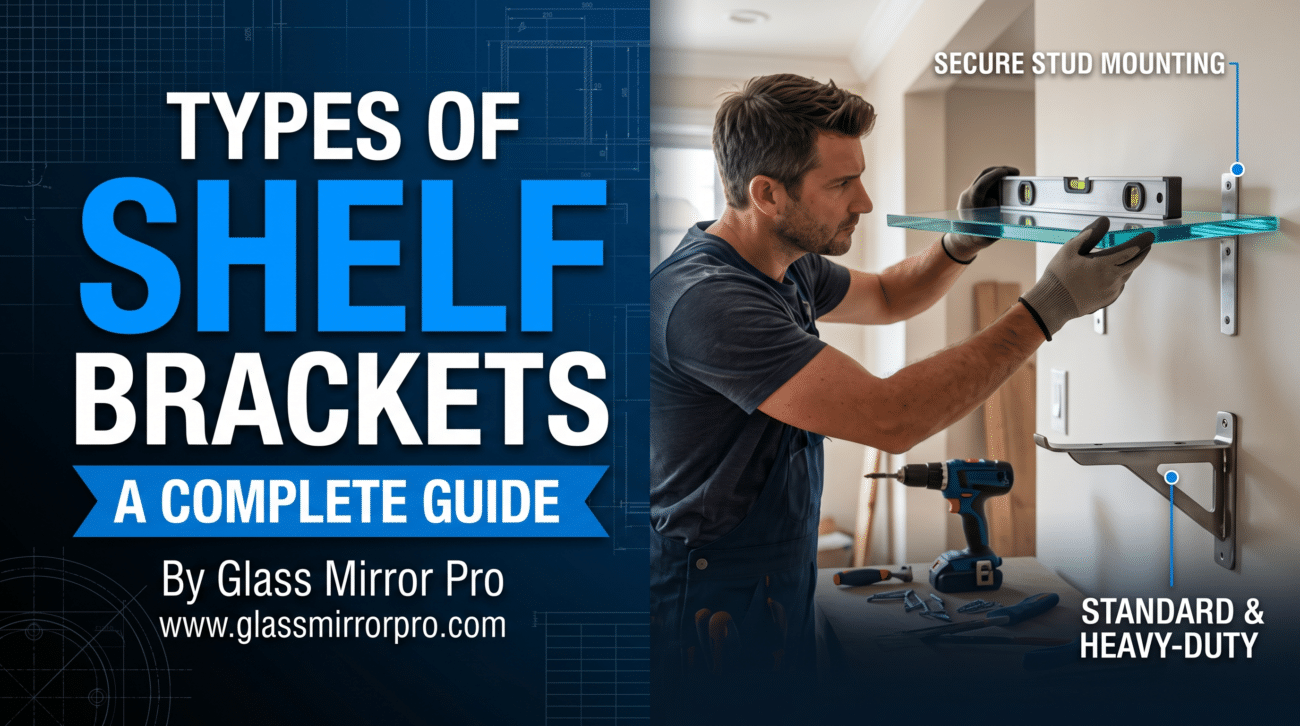
Installing custom glass shelves is one of the quickest ways to elevate a bathroom, showcase collectibles in your living room, or open up a crowded kitchen. However, unlike standard wooden planks, glass requires specialized hardware to ensure it stays beautiful, secure, and fracture-free. Choosing the wrong hardware can lead to scratched glass, sliding panels, or a devastating collapse. In this guide, we’ll explore the different types of shelf brackets available, their weight capacities, and which ones are specifically designed to safely cradle custom glass.

1. Adjustable Clamp Brackets (Pelican/Alligator Clips)
If you are installing glass, adjustable clamp brackets (often affectionately called “pelican” or “alligator” clips due to their mouth-like shape) are the undisputed champions. The base of the bracket screws securely into the wall stud, and the “mouth” of the bracket opens up to accept the glass. Once the glass is inserted, a set screw underneath tightens the jaws down. The crucial feature here is that the inside of the jaws is lined with soft silicone or rubber pads. This protects the glass from raw metal contact and grips the pane tightly so it cannot slide forward. They can typically accommodate glass thicknesses from 1/4-inch to 1/2-inch.
2. Floating Shelf Channels
For an ultra-modern, minimalist aesthetic, floating shelf hardware is the way to go. Instead of individual clips, this system uses a continuous aluminum channel (like a U-shape) that is mounted flush against the wall. The back edge of the glass shelf slides deeply into this track, giving the illusion that the glass is hovering in mid-air. Because the weight is distributed evenly across the entire back edge of the glass, it provides excellent stability. However, according to safety guidelines from the National Glass Association (NGA), floating shelves generally have a lower weight capacity than heavy-duty angled brackets and should be reserved for lighter display items.
3. Angle or L-Brackets
L-brackets are the most common, traditional shelf supports on the market. They form a 90-degree angle, with one leg screwed into the wall and the other extending outward to hold the shelf. If you need to store heavy items like stacks of dinnerware or heavy books, heavy-duty L-brackets screwed directly into wall studs offer the highest weight capacity. Important Note for Glass: If you use L-brackets for glass shelves, you must ensure the brackets come with rubber bumpers or suction cups on the top surface. Resting heavy glass directly against bare steel creates pressure points that will inevitably cause the glass to crack or chip over time.
4. Decorative Corbel Brackets
If you want the hardware to be part of the design statement, decorative corbels are fantastic. These are often made of ornate carved wood, cast iron, or elegantly scrolled metal. They operate similarly to an L-bracket but provide a much larger, more decorative footprint against the wall. They look stunning when paired with thick, beautifully polished glass. Just like L-brackets, make sure you apply clear silicone bumpers to the top of the corbel to give the glass a soft, grippy surface to rest on securely.
Ready to Display in Style?
Selecting the perfect bracket is only half the battle. To ensure your display is safe, strong, and stunning, you need high-quality, custom-cut tempered glass. Don’t settle for flimsy, standard-sized glass that doesn’t fit your wall space! The experts at Glass Mirror Pro will custom-cut and beautifully polish the perfect glass shelves to your exact required dimensions.


Leave a comment