
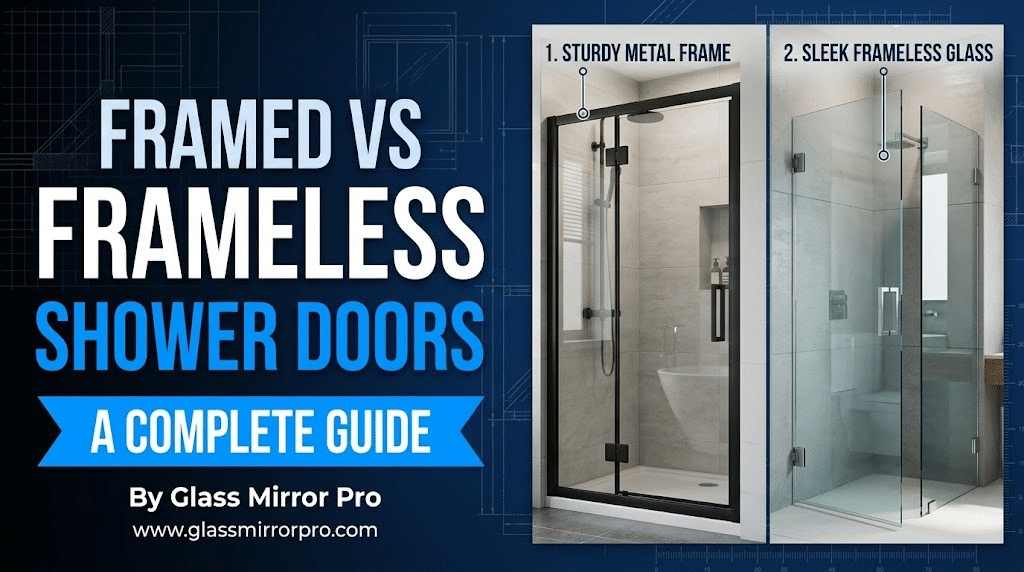
Framed vs. Frameless Shower Doors: Which Style is Right for You?
Published by Glass Mirror Pro | Expert Glass & Mirror Solutions
Planning a bathroom renovation involves countless design decisions, but few impact the final look and feel of the room quite like your shower enclosure. When shopping for shower doors, you will instantly face a major fork in the road: should you choose traditional framed doors or modern, sleek frameless glass? Both options keep water inside your shower, but they differ drastically in cost, glass thickness, cleaning maintenance, and aesthetic appeal. In this comprehensive guide, we pit framed against frameless shower doors to help you determine which style best fits your home and budget.

1. Framed Shower Doors: Traditional and Budget-Friendly
Framed shower doors have been a staple in American homes for decades. As the name implies, the glass panel and door are completely surrounded by a metal frame (typically aluminum or composite) that acts as a structural exoskeleton. Because the metal frame bears the weight, these doors use much thinner glass—usually around 1/8-inch to 3/16-inch thick.
* Pros: They are significantly more affordable, highly budget-friendly, and very easy to install. The metal tracks also provide built-in water containment.
* Cons: The metal tracks trap standing water, soap scum, and hair, making them a hotspot for pink mildew and black mold that requires tedious scrubbing with a toothbrush.
2. Frameless Shower Doors: The Modern Luxury Standard
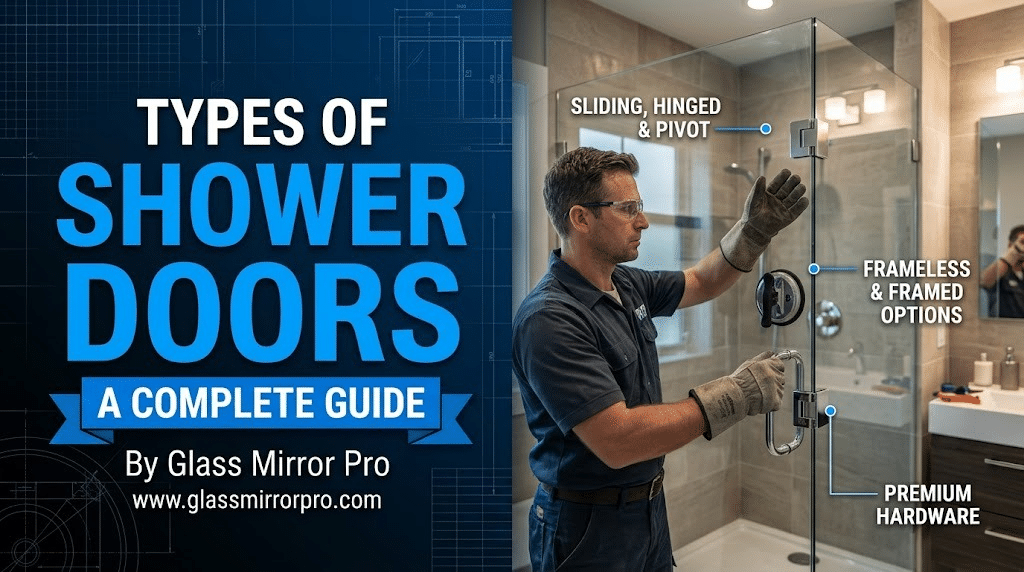
Frameless shower doors are the undisputed gold standard in luxury interior design. They eliminate bulky metal tracking entirely, utilizing heavy-duty tempered safety glass and minimal, high-end hardware (like heavy brass hinges and corner clips) to hold the enclosure together.
* Pros: They create an open, airy, spa-like aesthetic that showcases intricate tile work and makes small bathrooms feel twice as large. Without metal tracks, cleaning is a breeze—a quick swipe with a squeegee keeps them spotless.
* Cons: They carry a higher initial investment due to the heavy glass and precision hardware, and they require professional installation.
3. Glass Thickness and Structural Integrity
The most substantial difference between the two styles is the glass itself. Framed doors use thin glass because the metal frame absorbs the mechanical shock and structural stress. Frameless doors rely entirely on the rigidity of the glass. According to safety glazing guidelines from the National Glass Association (NGA), frameless shower doors must be manufactured from heavy-duty tempered safety glass measuring either 3/8-inch (10mm) or 1/2-inch (12mm) thick. This substantial thickness gives frameless doors a heavy, vault-like feel and extreme durability.
4. Head-to-Head: Which Should You Choose?
When making your final decision, weigh your priorities:
- Go with Framed if: You are working with a strict renovation budget, prefer the traditional look of metal trim that matches your bathroom faucets, or need forgiving tracks that help bridge minor out-of-plumb wall gaps.
- Go with Frameless if: You want to maximize natural light, highlight expensive custom tile, hate scrubbing mold out of metal tracks, and want a timeless, high-end investment that significantly boosts your home’s resale value.
Build Your Dream Shower Enclosure Today
Whether you choose a sleek frameless pivot door or a sturdy custom layout, off-the-shelf big-box store doors rarely fit unique bathroom dimensions. Get the exact style and precision fit your home deserves! The glass experts at Glass Mirror Pro custom-cut and temper high-quality shower glass panels tailored directly to your precise specifications.
Leave a comment