
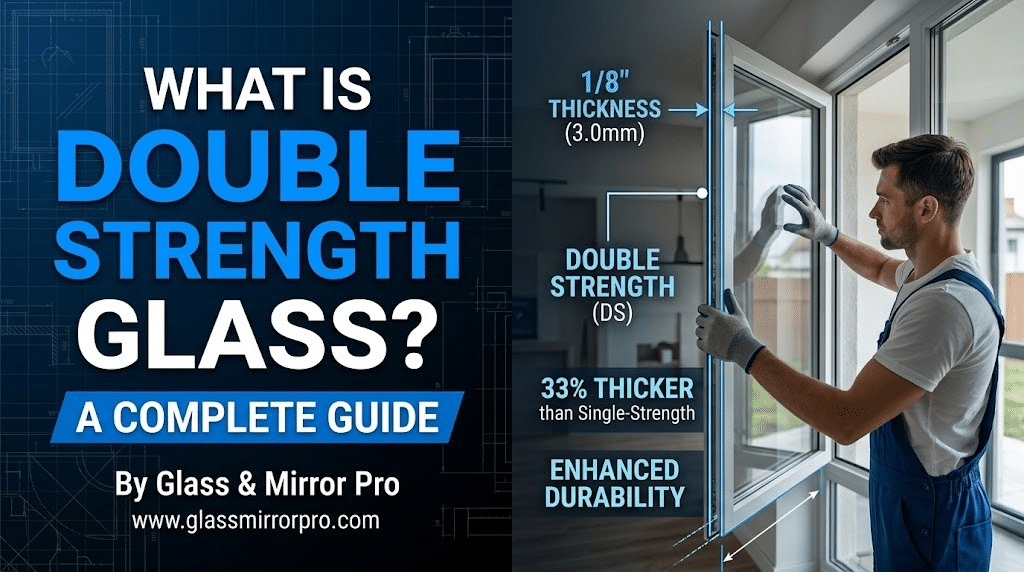
What is Double Strength Window Glass? Everything You Need to Know
Published by Glass Mirror Pro | Expert Glass & Mirror Solutions
When replacing a broken window pane or upgrading your home’s glazing, you are bound to encounter industry jargon that can be confusing. One of the most common decisions you will face is choosing between “single strength” and “double strength” glass. But what is double strength window glass exactly? Simply put, the term “strength” in this context refers directly to the thickness of the glass pane. Understanding this difference is critical to ensuring your new window is durable, safe, and up to modern building standards.
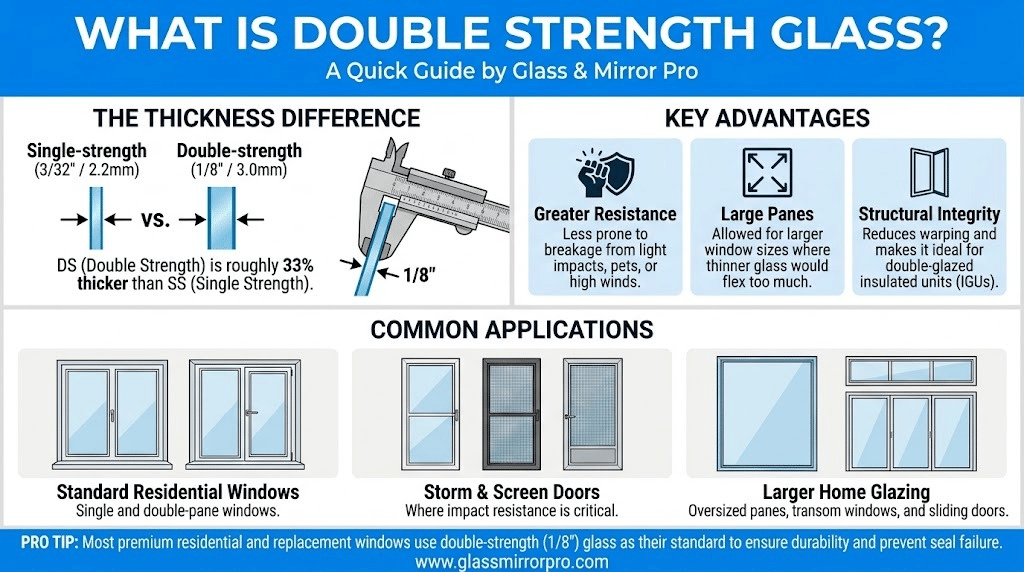
Visual Guide: Understanding Glass Strength
1. Single Strength vs. Double Strength: The Measurements
In residential construction, flat glass is governed by strict manufacturing rules like the ASTM C1036 Standard Specification. According to standard sizing, Single Strength glass (SSB) is approximately 3/32 of an inch thick (about 2.2 mm to 2.5 mm). This thin glass was traditionally used in older, smaller residential windows and picture frames. Double Strength glass (DSB), on the other hand, measures 1/8 of an inch thick (approximately 3.0 mm to 3.2 mm). While a 1/32-inch difference might sound insignificant to the naked eye, this added thickness drastically alters the structural integrity, weight, and performance of the window pane.
2. The Benefits of Double Strength Glass
Most premium, builder-grade windows manufactured today utilize double strength glass for a very good reason. The benefits far outweigh the slightly higher upfront cost:
- Increased Durability: The 1/8-inch thickness makes the pane significantly more resistant to cracking during harsh weather, high winds, or accidental bumps.
- Reduced Bowing and Distortion: Thin single strength glass can visibly bend or “bow” when installed in a large frame, causing optical distortion. Double strength glass remains rigid across larger spans.
- Improved Sound Insulation: Because sound waves have a harder time traveling through thicker materials, double strength glass helps muffle exterior noise from traffic and neighbors better than its thinner counterpart.
3. Double Strength vs. Tempered Glass
A very common misconception in the glazing industry is that double strength glass is the same thing as safety or tempered glass. This is false. Double strength simply refers to the raw thickness of standard, annealed flat glass. If broken, it will still shatter into large, dangerous shards. Tempered glass, on the other hand, undergoes a specialized heating and rapid cooling process to make it up to four times stronger than annealed glass, and causes it to shatter into harmless pebble-like pieces when broken. You can absolutely order 1/8-inch thick (double strength) tempered glass, but the thickness alone does not make it safety glass!
4. When Should You Use Double Strength Glass?
If you are replacing a tiny pane in a small, segmented decorative window or replacing glass in a delicate picture frame, single strength (3/32″) glass is perfectly fine and helps keep the weight down. However, the Department of Energy guidelines emphasize structurally sound fenestration for optimal efficiency. If you are replacing a standard residential window pane that exceeds 24 inches in any direction, upgrading to double strength (1/8″) glass is heavily recommended. It provides the necessary stiffness to withstand wind loads and daily wear-and-tear without rattling in the frame.
Ready to Upgrade Your Windows?
Now that you know the difference between single and double strength glass, you are ready to make the best, most durable choice for your home. Don’t settle for thin, fragile glass when doing a repair. Let the experts at Glass Mirror Pro custom-cut the perfect, heavy-duty double strength replacement pane for your specific needs, shipped safely and directly to your door.




Leave a comment